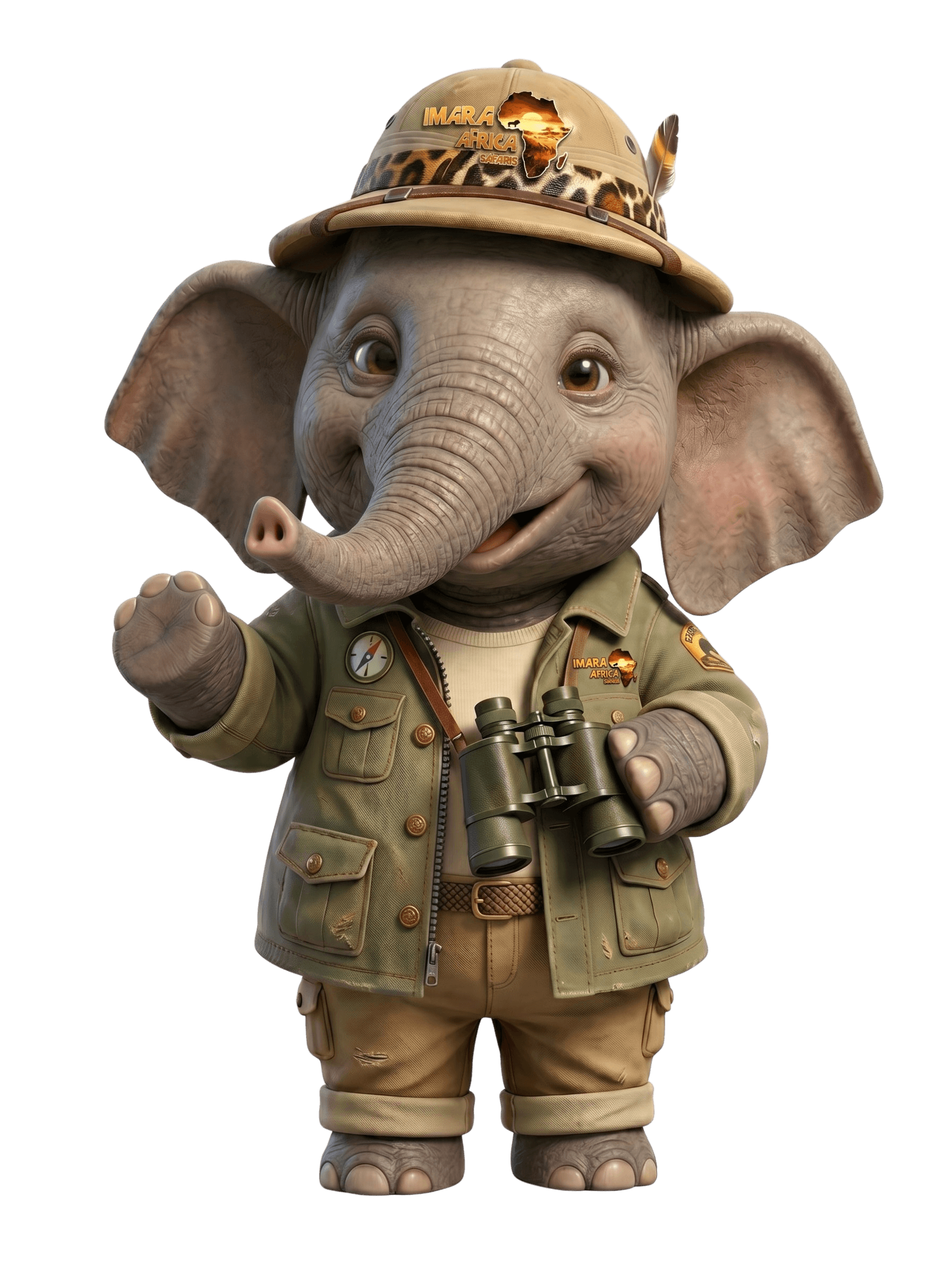
Earth's Largest Land Animal
The African elephant is the largest living terrestrial animal. Adult bulls can stand up to 4 metres (13 ft) at the shoulder and weigh over 6,000 kg (13,200 lb). Their enormous ears, shaped like the African continent, help regulate body temperature.
Intelligence & Emotion
Elephants are among the most intelligent animals on the planet. They exhibit self-awareness, use tools, mourn their dead, and show empathy. Their memory is legendary — matriarchs can remember watering holes visited decades earlier and recognize hundreds of individual elephants.
Social Structure
Elephant society is matriarchal. Herds are led by the oldest, most experienced female — the matriarch — who guides the family to food, water, and safety. Males leave the herd at adolescence and form loose bachelor groups or roam solo.
Ecosystem Engineers
Elephants are true ecosystem engineers. By uprooting trees, digging water holes, and dispersing seeds over vast distances, they shape the landscape and create habitats that benefit countless other species. A single elephant can disperse seeds over 60 km.
Conservation
Despite a global ivory ban, poaching and habitat loss remain critical threats. The African elephant population has declined from an estimated 3–5 million in the early 1900s to approximately 415,000 today. Both the African bush elephant and African forest elephant are now classified as endangered.